

When custom software is the right call
Template tools are genuinely better for some jobs. Custom development pays off in four situations.
- Your process is the product — approval chains, pricing rules or scheduling specific enough that adapting a generic tool costs more than building the system that matches them.
- Spreadsheets became infrastructure. One wrong cell breaks stock counts or invoices; a typed database with permissions and an audit trail prevents that.
- Your tools do not talk. Budgets, attendance and bookings live in three dashboards, so staff re-enter data and lose track of which version is correct.
- You pay per seat forever. Software you own on infrastructure you control stops scaling its price with headcount.
If you need a marketing site with a contact form, our web development service is the honest recommendation. Custom development starts where content alone stops being enough.
Who we are a good fit for
Teams of five to several hundred people who already know their process and need software to match it.
- Operations and finance leads reconciling data by hand between departments.
- Founders who need a booking, ordering or account portal rather than a full product team.
- Companies whose internal tools no longer match how the company works.
- Teams that want a defined scope and fixed IDR price, not open-ended hourly work.
We are a poor fit while requirements are still being discovered through the build, or when the only success criterion is the lowest upfront cost. Both lead to rewrites.
What you receive
Artefacts you can hand to another team without a knowledge-transfer project attached.
- A signed scope document: every workflow, user role and integration, with acceptance criteria.
- Interface designs for each screen, reviewed before production code is written.
- A production repository with typed data models, migrations and environment config under version control.
- Automated checks on critical paths — authentication, payments, data writes.
- A deployment runbook, a recorded handover, and thirty days of defect cover.
The stack we build on
Boring, well-supported tools, used consistently — nothing experimental and nothing your future maintainers would have to learn from scratch.
Next.js (App Router)
Server-rendered screens and one deployment target for app and marketing pages.
React 19 + TypeScript
A renamed field or missing permission breaks the build, not production.
Laravel
Billing rules, queues and scheduled jobs kept in one readable backend.
Python
Data processing, scraping and reporting where the libraries already exist.
PostgreSQL
Constraints and versioned migrations; reporting without a separate warehouse.
Docker + CI
Identical environments, with checks running on every pull request.
Discovery, Design, Development, Launch
Four stages, each with a clear deliverable, so you always know what is being produced next.
Discovery
We map the current process, including steps that only exist because the old tool demanded them. Output: workflows, roles, integrations, acceptance criteria and a fixed IDR quote.
Design
Screens are designed against real data, including the awkward states: no records, a failed payment, a missing permission. You approve the designs before build.
Development
Work ships in reviewable increments with a staging environment you can click through weekly. Database changes arrive as migrations, never as manual edits to a live database.
Launch
The import runs with a rollback plan, we monitor the first days of real traffic, then hand over the repository, runbook and a recorded walkthrough.
Selected builds
Three projects from the portfolio, described by what was delivered rather than by adjectives.
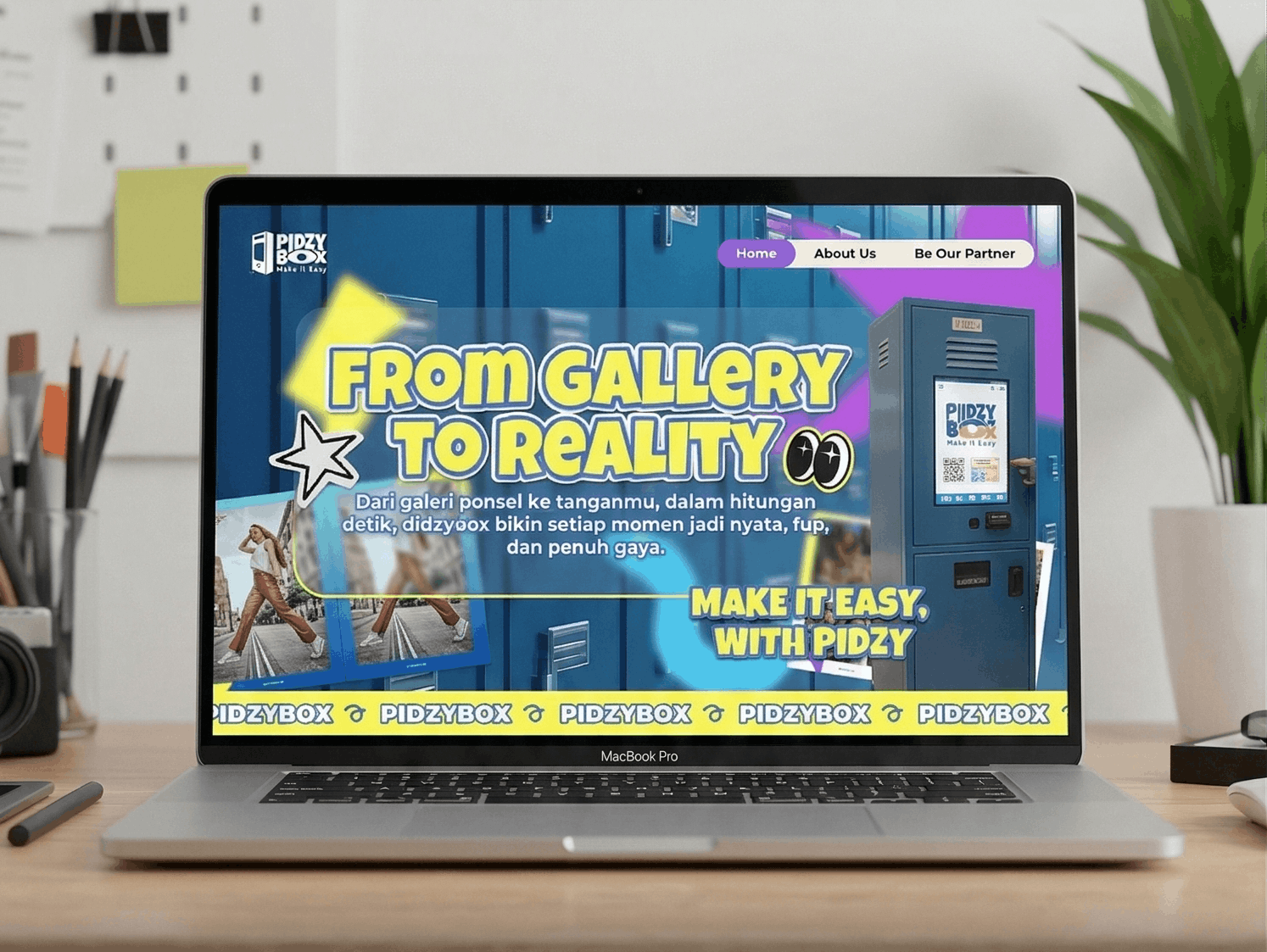 Web ApplicationUI/UX
Pidzybox
Pidzybox make it easy to print your moments
Read the case study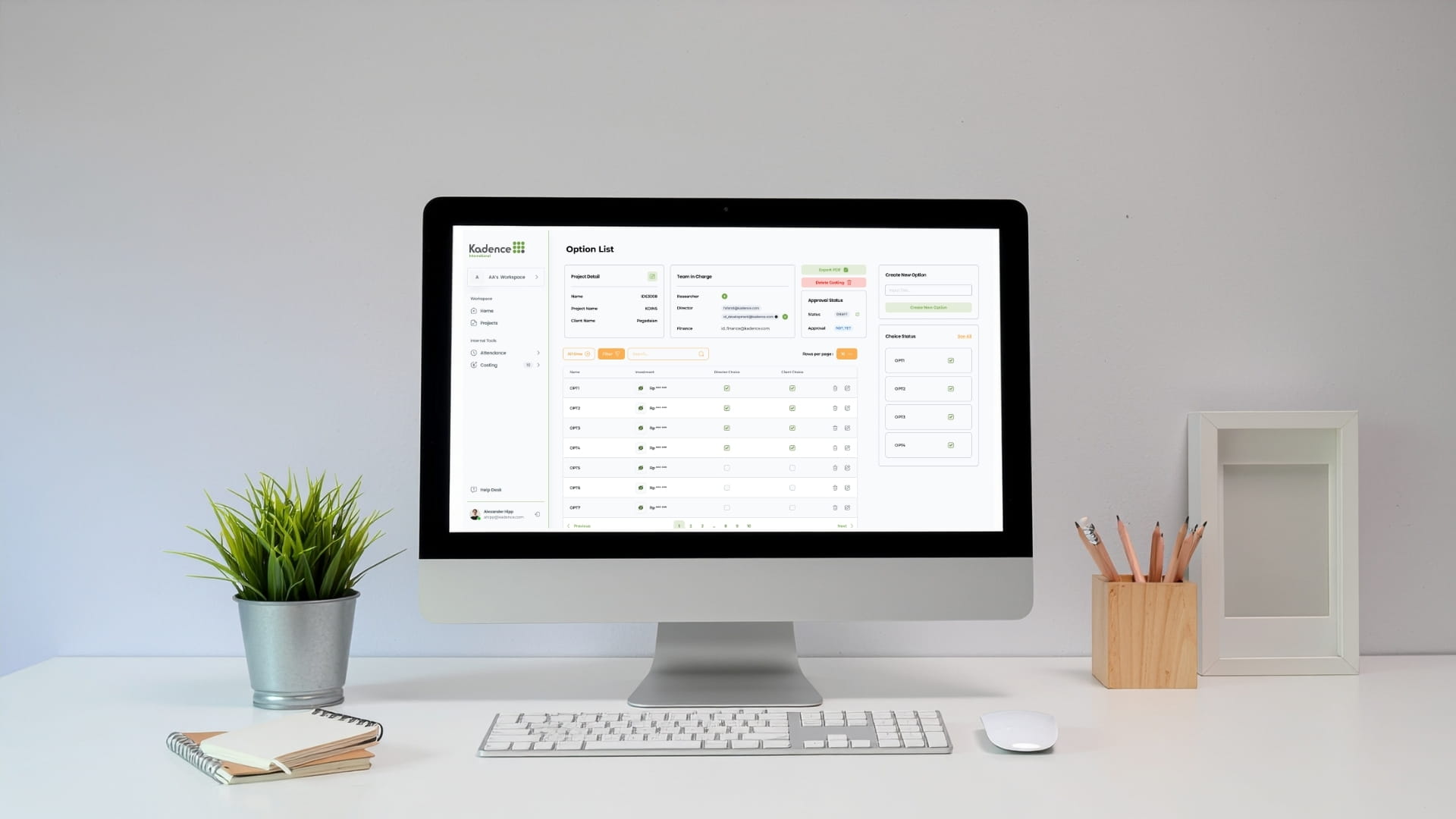 Web ApplicationUI/UX
Kadence Internal System
The redesign of Kadence International’s internal websites, transforming fragmented tools for budget management, attendance tracking, and workspace booking into a unified, intuitive platform serving over 500 employees across global teams.
Read the case study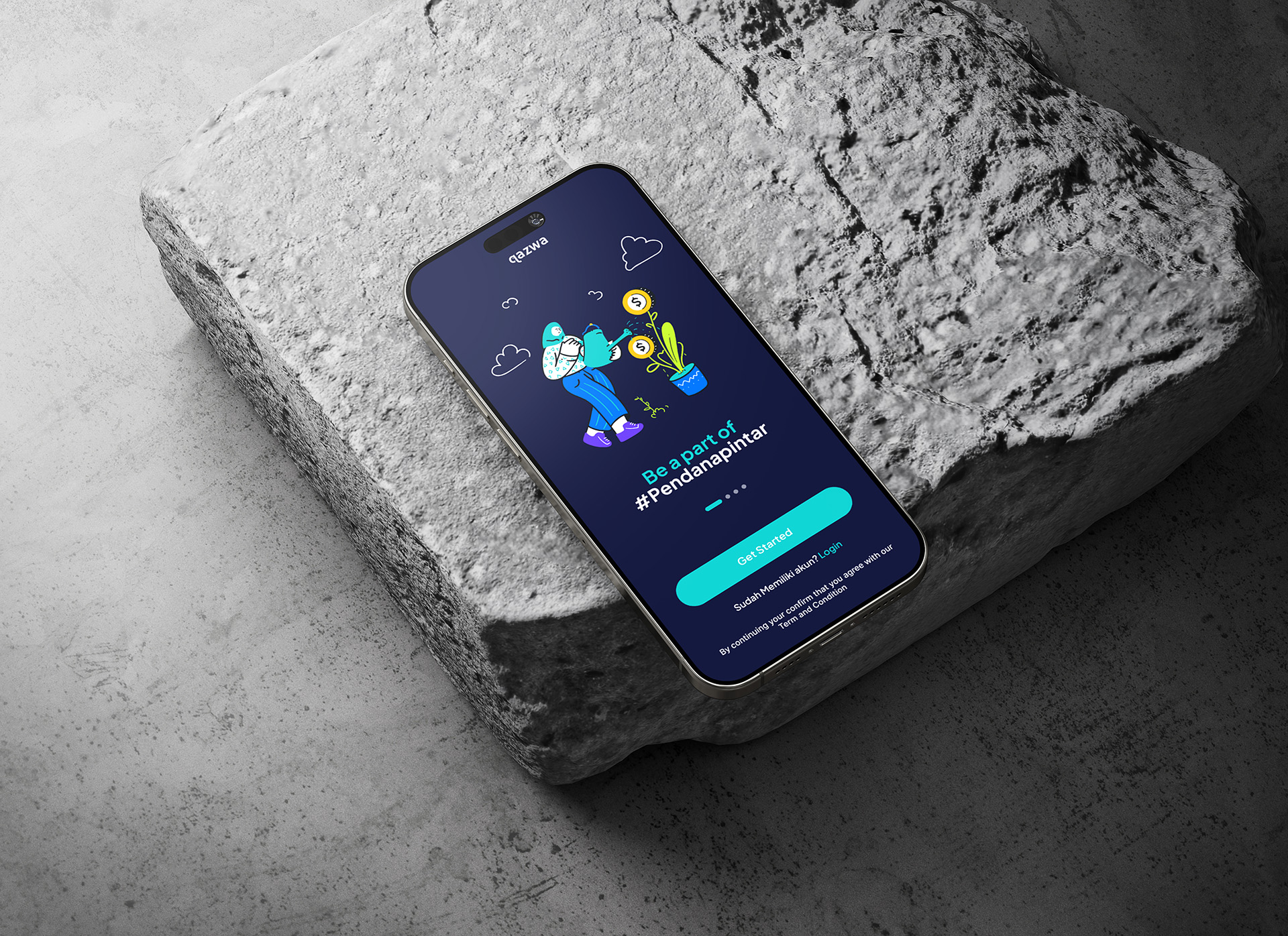 UI/UX
Qazwa
Qazwa is an Islamic finance platform that makes halal investing simple and accessible.
Read the case study
Full write-ups live on the projects page. If you need references for your industry, ask in discovery and we will answer honestly.
Pricing
Starting prices in IDR from our published price list. Scope decides the final quote.
App MVP
Starting from IDR 25 Million
- Most popular
App Professional
Starting from IDR 40 Million
App Enterprise
Starting from IDR 80 Million
Starting points. Prices in IDR. USD quotes confirmed per project. Third-party costs such as hosting, gateway fees and paid APIs are billed at cost.
Maintenance after launch is optional and starts from IDR 500k per month for small systems. We add no markup on hosting or gateway fees.
Frequently asked questions
We've heard it all. Here's everything you need to know before working with us.
Ask a questionHow is a custom build priced?
A fixed scope in IDR, agreed before development starts, based on workflows, integrations and user roles. You pay once for software you own instead of a per-seat subscription that grows with headcount.
Do we own the source code?
Yes. On final payment the repository, database schema and deployment configuration transfer to your organisation. No runtime licence from us, and nothing prevents an in-house team from taking over.
How long does a first version take?
The timeline is agreed in writing after discovery, before code starts. Scope, integrations and the number of user roles move it more than anything else, so we commit to dates only once those are settled.
Can you work with our existing engineers?
Yes. We can own delivery, or take one module while your team keeps the rest. We agree on the API contract and repository boundaries first so neither side blocks the other.
What happens after launch?
Handover session, written runbook and thirty days of defect cover. After that you maintain it yourself, or keep us on a monthly retainer covering updates, monitoring and small changes.