

Where app projects usually break
Most failed app projects fail for the same handful of reasons, and none of them are about the framework.
- The app is treated as a design deliverable, so nobody plans the backend until screens are approved.
- Store accounts, certificates and signing keys are held by a contractor, and releases stop when the relationship does.
- Offline behaviour is discovered late: the app assumes a connection the user does not have.
- Push notifications, deep links and payments get bolted on after launch, forcing changes to navigation.
- Every platform-specific fix becomes two codebases, and the second one always falls behind.
A product that needs a larger backend, an admin panel for staff, or a web app next to the mobile client is custom software development, scoped as one system instead of three separate projects.
Who this is for
Teams with a defined user and a reason to be in the app stores.
- Founders taking a validated service or marketplace into a mobile app.
- Businesses whose field staff, drivers or technicians need a tool that works offline.
- Companies with an existing app that no longer builds against current store requirements.
- Product teams adding a mobile client to a web platform and wanting one shared API.
We are a poor fit when the requirement is a thin wrapper around a website with no offline, notification or device feature — a responsive web app is cheaper and easier to update.
What you receive
An app, the backend it talks to, and everything needed to publish it under your own name.
- A tested React Native app for iOS and Android, with a shared component set and typed API client.
- Backend API, database schema and migrations — not a spreadsheet pretending to be a server.
- Authentication, role handling and permission rules, tested against real misuse.
- Push notifications, deep links and store-ready signing configuration.
- An admin surface for the operations your staff actually perform.
- Store listings, screenshots and a release checklist for both stores.
- Handover: repositories, environment variables, account ownership and a written runbook.
What we build it with
Boring, well-supported tools chosen so your next developer is not learning an in-house framework.
React Native + Expo
One codebase for both stores, with native modules where the platform demands them.
TypeScript
Shared types between app and API, so a contract change breaks the build instead of the release.
Next.js
Admin panels, web views and the marketing surface stay in the same stack as the API.
PostgreSQL
Relational data with constraints and access rules, not schema drift in client code.
Laravel or Node services
Background jobs, payments and third-party syncs live outside the mobile release cycle.
EAS + CI
Builds and store submissions are repeatable, not a laptop ritual.
Discovery, Build, Test, Release
Four stages, each ending in something you can inspect.
Discovery
Map the device features, offline cases, backend data and store constraints. Output: screen inventory, API contract, fixed IDR quote and a release scope.
Build
Weekly builds you can install on a real phone, not a status report. Backend and app move together so the contract is proven before the UI depends on it.
Test
Device matrix, offline and permission paths, store review requirements, and a small group of real users before submission.
Release
Submission under your accounts, post-launch monitoring, and either a handover session or a retainer for compliance updates.
Apps and products we have built
Three builds where the hard part was the workflow, not the interface.
 Web ApplicationUI/UX
Pidzybox
Pidzybox make it easy to print your moments
Read the case study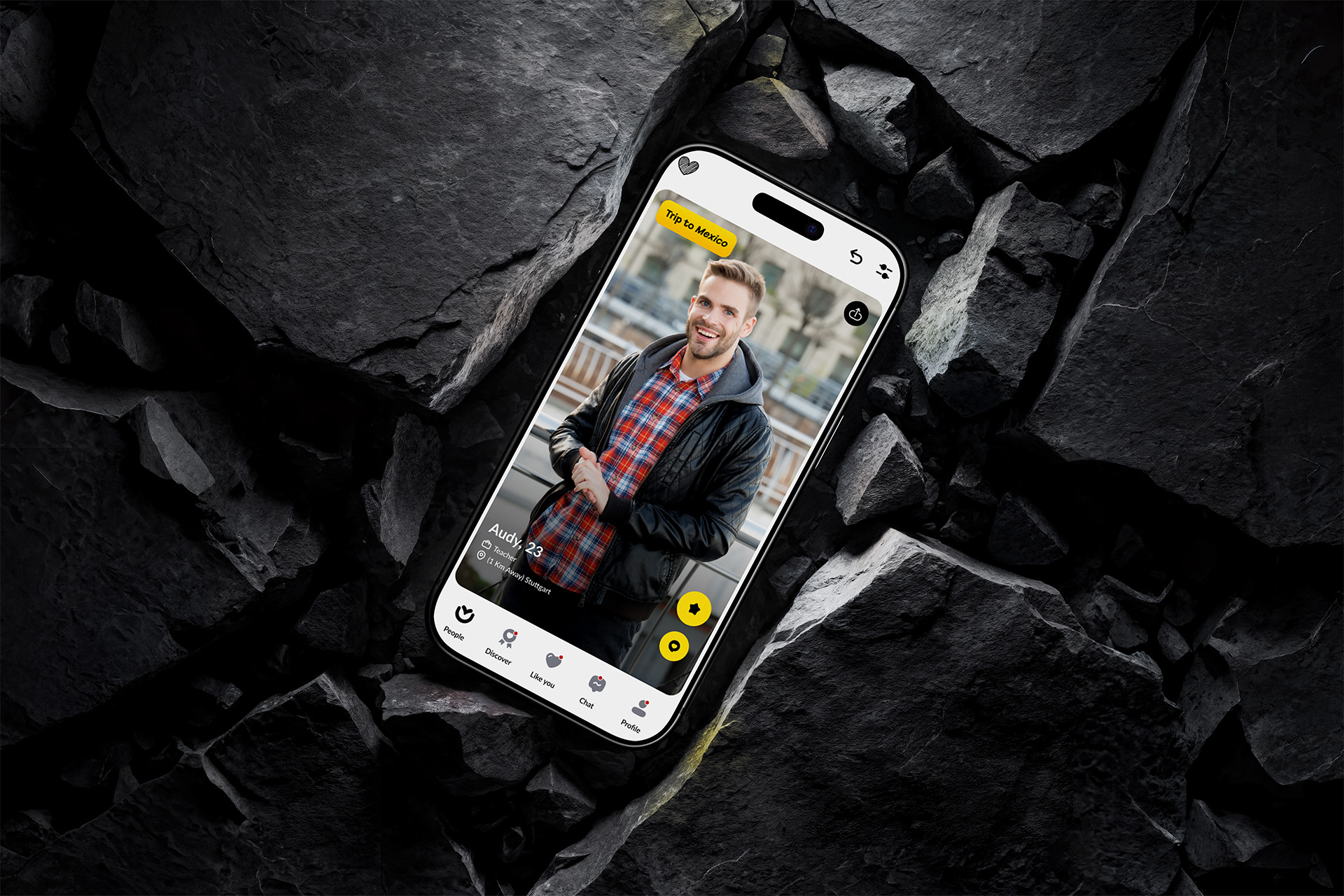 UI/UX
Lova
Lova is a dating app that helps you find your perfect match.
Read the case study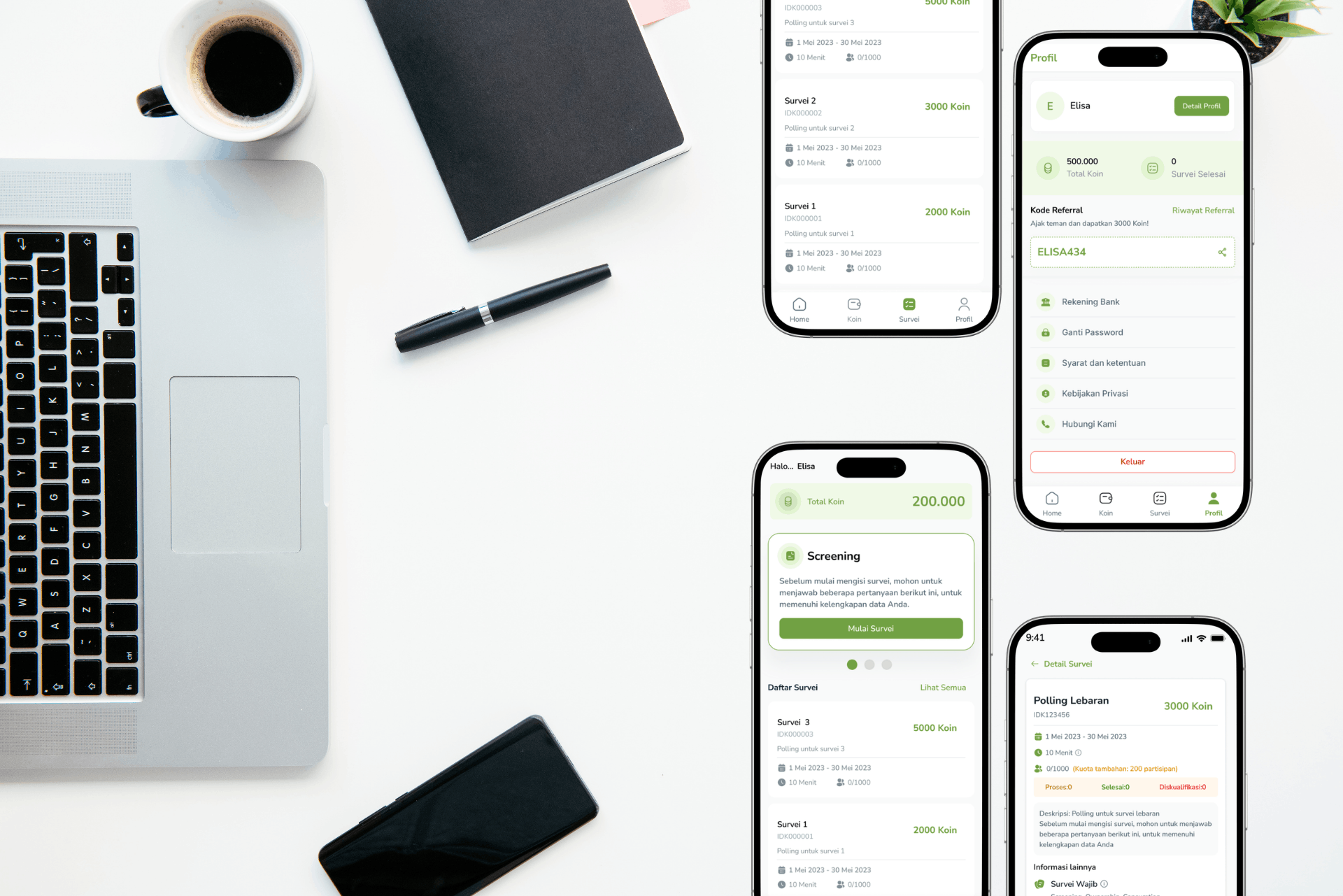 UI/UX
Koins
KOINS UI/UX design, a mobile-first savings app empowering 100K+ Indonesian users to build habits through gamification, targeting young professionals in Jakarta like myself who juggle gym routines, freelance gigs, and financial goals.
Read the case study
Case studies live on the projects page. If the app needs an assistant inside it, see AI integration.
Pricing
Starting prices in IDR from our published price list. Feature count, integrations and platform scope decide the final quote.
App MVP
Starting from IDR 25 Million
- Most popular
App Professional
Starting from IDR 40 Million
App Enterprise
Starting from IDR 80 Million
App builds. Prices in IDR. USD quotes confirmed per project. Store fees and third-party services are billed at cost by the provider.
App development questions
We've heard it all. Here's everything you need to know before working with us.
Ask a questionDo you build native or cross-platform?
Cross-platform with React Native unless the product genuinely needs native modules on both platforms. One codebase means one bug fix, one release checklist and one design system, which matters more than a marginal frame-rate difference for most apps.
Who owns the app store accounts?
You do. We work under your Apple Developer and Google Play accounts from the start, so certificates, signing keys and store listings never sit with an agency you might leave.
Can you take over an existing app?
Usually yes, after an audit of the codebase, dependency age and store status. If the honest answer is a rebuild, you get that in writing with the reasons, not a slow drift into one.
How do updates work after launch?
Either your team ships them, or we keep a monthly retainer covering dependency updates, store compliance and a set number of changes. Store policy changes are the usual reason an untouched app stops being publishable.
Does the app need a backend?
If it stores anything shared, authenticates users or sends notifications, yes. We build it as a small typed API behind the app, so the mobile client is not the source of truth.
Have an app idea that needs a real release plan?
Send the workflow you want to replace and the devices your users carry. We will tell you what can ship first and what should wait.