

Where AI integration actually pays off
Assistants are weak generalists and good at narrow, repetitive work. These four cases are where the effort justifies itself.
- The same questions arrive daily and a person retypes an answer that is already written down somewhere.
- Information is trapped in PDFs, contracts, supplier sheets or years of ticket history, so finding one clause means scrolling.
- Staff copy fields between two systems because the tools never agreed on a data contract.
- Drafting takes longer than reviewing. Proposals and replies follow a pattern a model can produce and a human correct faster than writing from scratch.
What does not pay off: pointing a chatbot at an undocumented process and hoping it discovers the rules. That is a software design problem, and it needs solving before a model is involved.
Who we are a good fit for
Organisations with volume, a system of record and someone accountable for the answers.
- Support or operations teams handling a steady queue of similar written requests.
- Businesses sitting on a document archive only two long-serving employees can navigate.
- Product teams who want one workflow automated end to end before committing to a platform.
- Companies that need the assistant inside their own tools, not behind a third-party chat widget.
We are the wrong choice with no data to ground answers in, no owner for correct behaviour, or a brief written for a board demo. We will say so, and propose the smaller piece that makes an assistant useful later.
What you receive
Everything lives in your repository and your accounts, including prompt versions and the evaluation set.
- A scope document listing each workflow, the data it may read, the actions it may take and who approves them.
- A retrieval index over documents you approve, with a refresh job so stale content stops being quoted.
- Tools with typed schemas, so a malformed model response fails validation instead of writing bad data.
- An evaluation set of real questions with known answers, and a recorded pass rate per workflow before launch.
- A request log holding prompt, sources, response and model used — credentials and personal fields redacted.
- A cost view per workflow, plus a runbook for changing a prompt without breaking behaviour.
The stack we build on
No locked-in AI platform. The model is the one replaceable part, and it sits inside code you own.
Next.js (App Router)
Route handlers and server actions keep model calls off the browser, so keys stay on the server.
React 19 + TypeScript
Streaming answers, citations and approval prompts typed end to end.
Python
Document ingestion, chunking, batch evaluation and anything needing a data library.
PostgreSQL + pgvector
Embeddings and business data in one database, with permissions you understand.
Laravel
Queues, retries and scheduled re-indexing for backends already written in PHP.
Docker + CI
Evaluations run on every pull request, so a prompt change is tested like code.
Discovery, Design, Development, Launch
Four stages. The first decides whether the other three are worth doing.
Discovery
Pick one workflow, count how often it runs and how long it takes today. Collect its documents and write down what a correct answer looks like. Output: fixed scope, evaluation set, IDR quote.
Design
Define the job narrowly: what it may answer, what it must refuse, when it escalates, which actions need approval. Low-confidence and empty-retrieval states are designed, not improvised.
Development
Wire retrieval and tools to a staging copy of your data. Run evaluations after every change, log every request, and try to break it with missing permissions and prompt injection.
Launch
Start with a small slice of real traffic, read the logs with your team, then widen. Handover covers prompt versioning, the cost view and how to change behaviour safely.
Selected work
A real assistant build, plus two systems showing the unglamorous foundation automation needs.
 Web ApplicationUI/UX
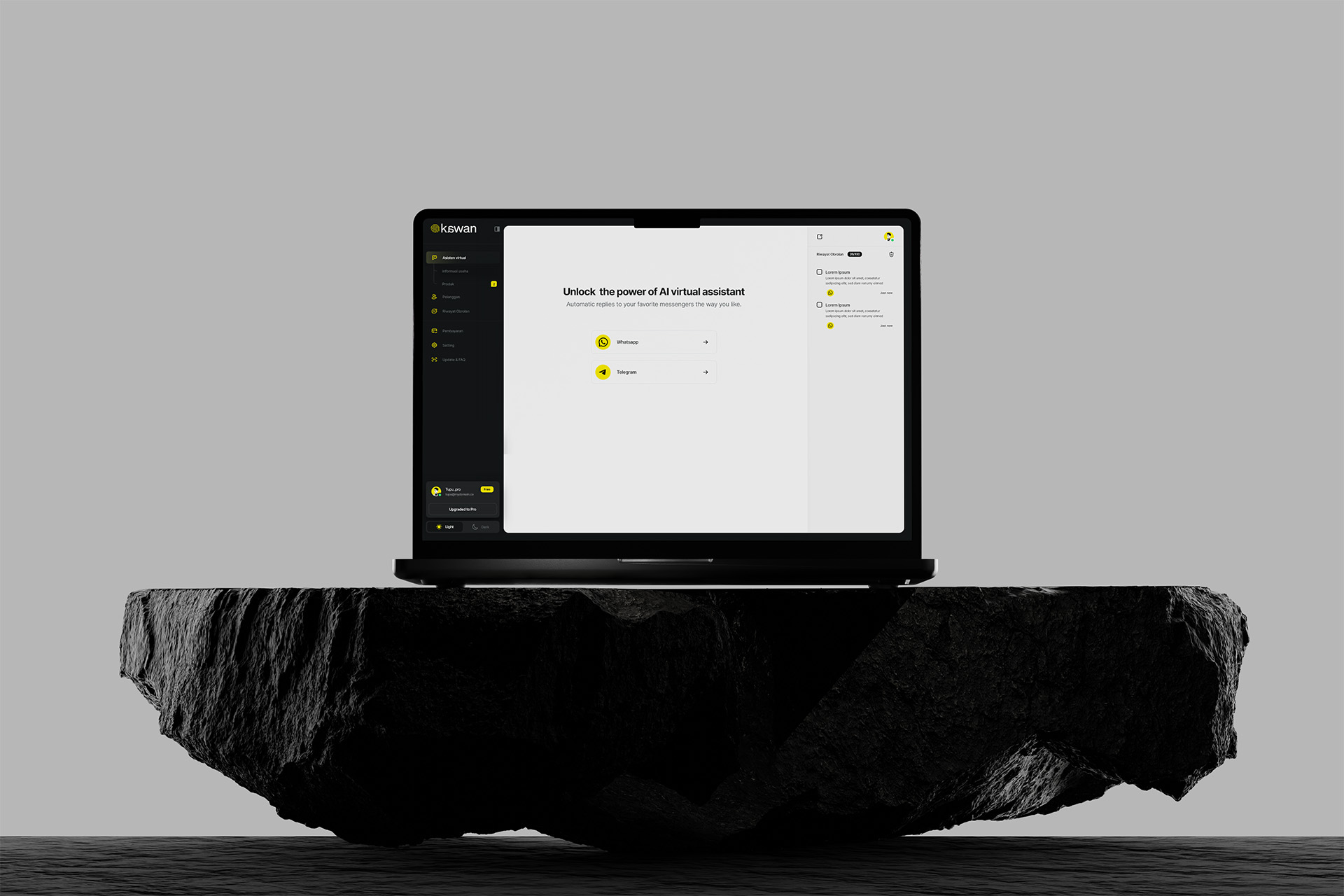
Kawan.ai
An AI Virtual Assistant solution created to help businesses automate customer service and administrative tasks.
Read the case study Web ApplicationUI/UX
Kadence Internal System
The redesign of Kadence International’s internal websites, transforming fragmented tools for budget management, attendance tracking, and workspace booking into a unified, intuitive platform serving over 500 employees across global teams.
Read the case study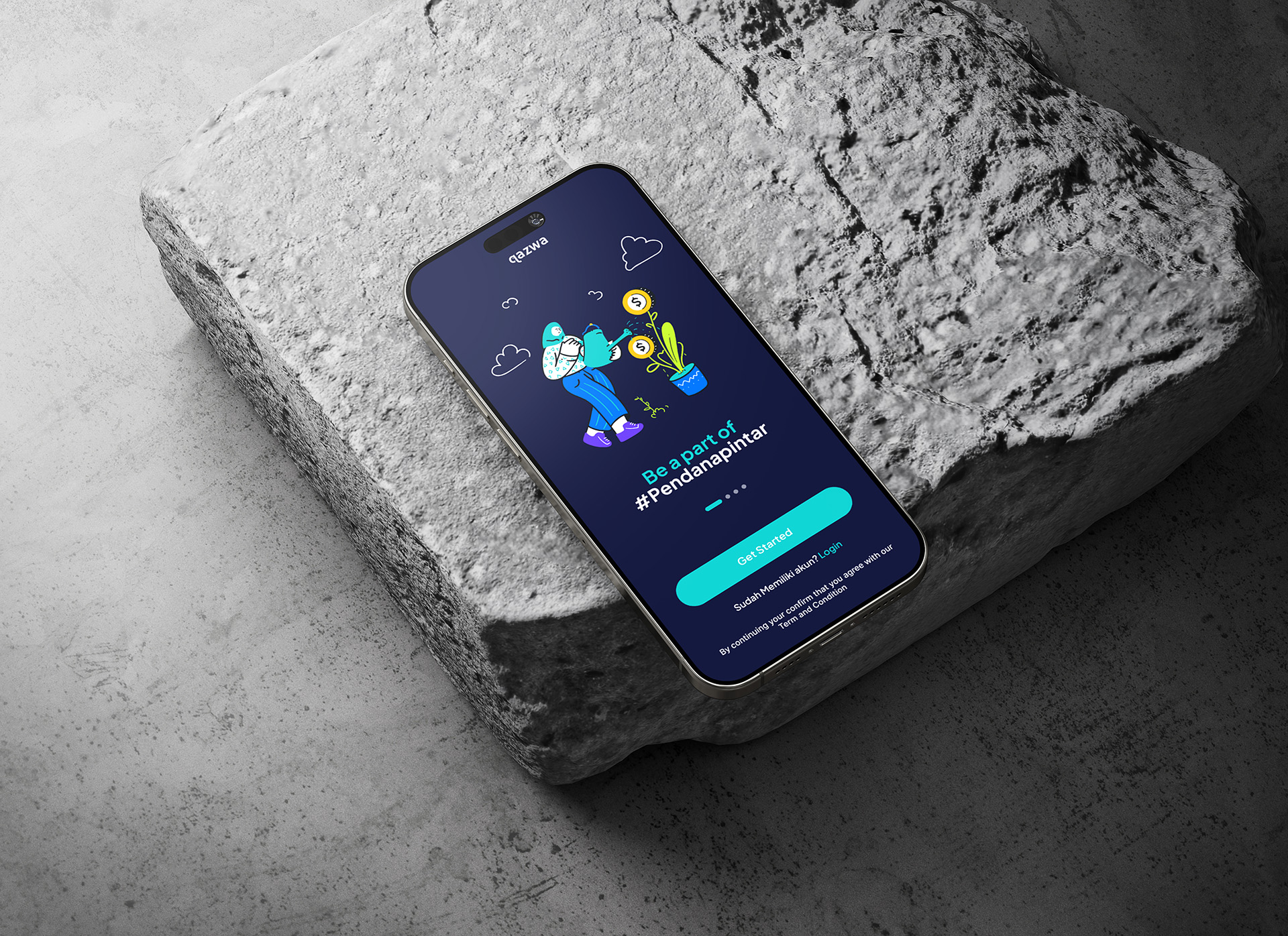 UI/UX
Qazwa
Qazwa is an Islamic finance platform that makes halal investing simple and accessible.
Read the case study
More builds are on the projects page. The interface work that makes an assistant usable sits under UI/UX design.
Pricing
Starting prices in IDR from our published price list. The workflow you choose decides the final quote.
AI Chatbot Basic
Starting from IDR 5 Million
- Most popular
AI Chatbot Pro
Starting from IDR 10 Million
AI Integration Custom
Starting from IDR 25 Million
Starting points. Prices in IDR. USD quotes confirmed per project. Model usage, vector storage and hosting are billed at cost by the provider, with no markup from us.
Support after launch is optional, from IDR 500k per month for small systems. Model usage stays on your own provider account, so you can see and cap it yourself.
Frequently asked questions
We've heard it all. Here's everything you need to know before working with us.
Ask a questionWhich model do you use?
Whichever fits the task and your constraints. The provider sits behind one interface in your codebase, so switching models later is configuration, not a rewrite. Where data cannot leave your infrastructure, we deploy an open-weight model you host.
Will our data be used to train someone else's model?
That depends on the provider and plan. We check retention and training terms first, enable no-training and limited-retention options where they exist, and send only the fields a workflow needs instead of dumping entire tables into a prompt.
What stops the assistant from inventing answers?
Retrieval, citations and a refusal path. Answers are built from passages in your own documents and each one names its source. When retrieval finds nothing relevant, the assistant escalates to a person. A set of real questions with known answers runs before every release.
How do you keep token cost from running away?
Each workflow gets a ceiling: a maximum context size, a per-request budget, and a fallback to a cheaper model or a plain template for oversized input. Usage is recorded in your own database, next to the number of tasks handled.
Can it take actions, or only answer questions?
Both, but writes are deliberate. Actions are typed tools with their own permissions, and anything touching money, stock or customer records waits for human approval. Read-only tools can run automatically once you trust the logs.