
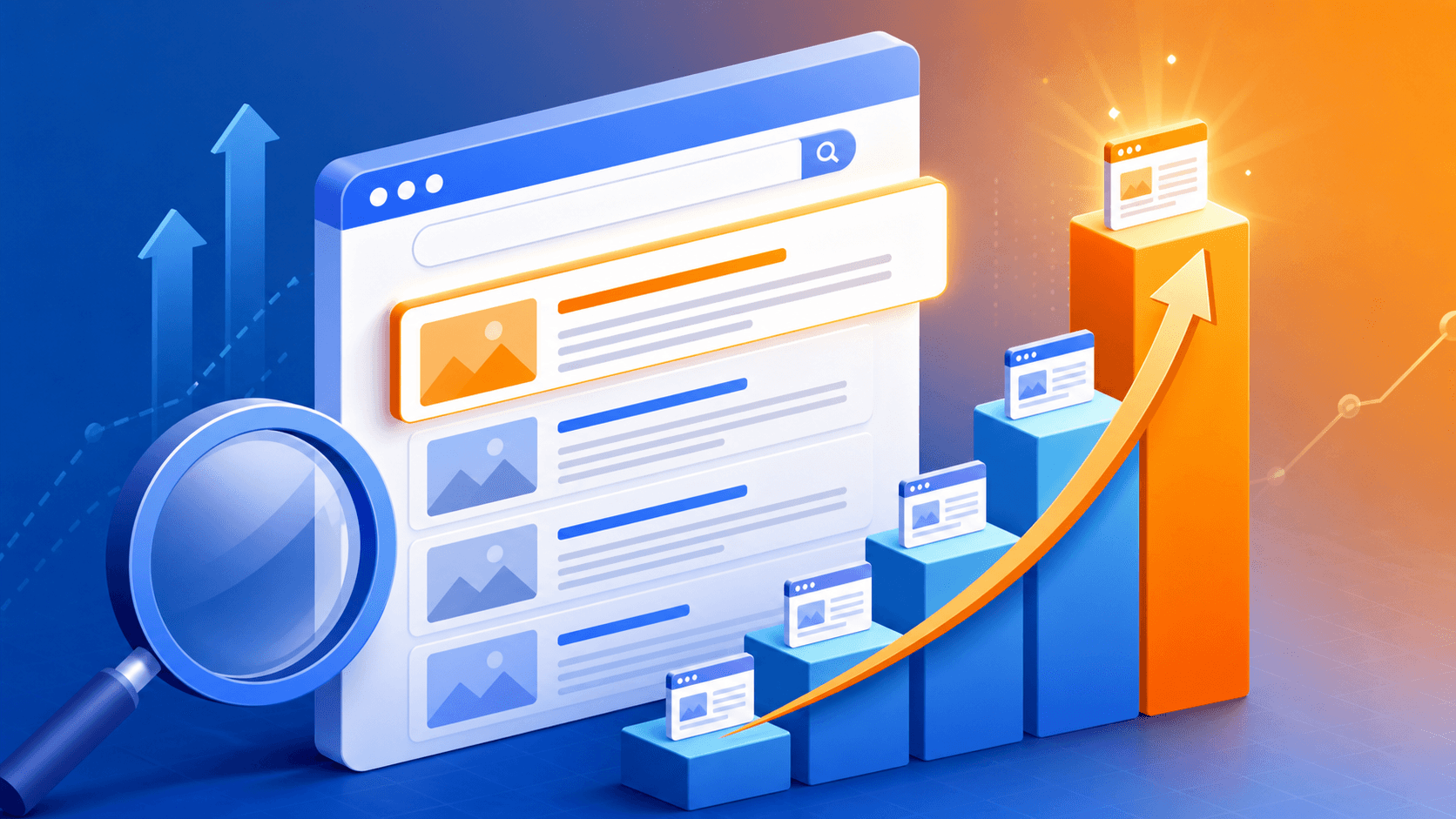

SEO for Beginners: How to Get Your Website on Page 1 of Google
If you have a website but it barely gets visitors from Google, you are not alone. Many business owners launch a site, publish a few pages, and expect traffic to come automatically. In reality, that is not how search works.
SEO, or search engine optimization, helps your website become easier to find when people search for your products or services. If you are just starting out, SEO can feel technical, confusing, and full of jargon. The good news is that the basics are easier to understand than most people think.
In this beginner-friendly guide, we will break down seo untuk pemula into practical steps. You will learn the four main pillars of SEO: on-page SEO, technical SEO, off-page SEO, and content quality. We will also cover free tools you can use and set realistic expectations, because SEO is a long-term game, not an overnight trick.
What SEO Really Means for Business Owners
SEO is the process of improving your website so Google can better understand it, trust it, and show it to the right audience.
For business owners, SEO is not just about rankings. It is about attracting people who are already looking for what you offer. That means the traffic from SEO is often more qualified than random traffic from ads or social media.
For example, if someone searches for “website design for small business” or “best coffee shop in Jakarta,” they already have intent. If your site appears on page 1, you have a much better chance of getting the click, the inquiry, and eventually the sale.
That said, one important thing to remember: SEO usually takes 3 to 6 months to show meaningful results, especially for a new website. In competitive industries, it can take longer. So if you are learning seo untuk pemula, start with patience and consistency.
On-Page SEO: Help Google Understand Your Pages
On-page SEO is everything you do on the page itself to make it clear, relevant, and useful.
This is often the easiest place for beginners to start because you have direct control over it.
Put Your Keyword in the Right Places
Google uses signals on your page to understand what the content is about. One of the most basic steps is placing your target keyword naturally in important areas.
For a page targeting seo untuk pemula, include the keyword in:
- The page title
- The meta title
- The meta description
- The main heading or H1
- At least one or two H2 subheadings if relevant
- The body content naturally
- The URL slug if possible
- The image alt text when appropriate
The key word here is naturally. Do not repeat the keyword too many times just to rank. That old tactic, known as keyword stuffing, makes content awkward and can hurt user experience.
Write Clear Titles and Meta Descriptions
Your title tag is one of the first things users see in Google results. It should be clear, relevant, and compelling enough to earn clicks.
A good title usually:
- Includes the main keyword
- Explains the topic clearly
- Stays concise
- Gives users a reason to click
Your meta description does not directly boost rankings in a big way, but it can improve click-through rate. Think of it like ad copy for your page.
Use Headings to Structure Content
Headings help both readers and search engines understand the flow of your page.
A simple structure looks like this:
- One H1 for the main topic
- H2s for major sections
- H3s for supporting points under each section
This makes your content easier to scan, especially for busy users on mobile devices.
Create Helpful, Relevant Content
Google wants to rank pages that solve the searcher’s problem. That means your content should answer real questions, not just chase keywords.
If you are writing for beginners, avoid sounding overly technical. Explain concepts simply. Use examples. Focus on clarity over complexity.
Good on-page SEO is not about adding keywords everywhere. It is about aligning your content with what users actually want.
Technical SEO: Make Sure Your Website Can Be Crawled and Used Easily
Technical SEO sounds intimidating, but the basics are manageable. Think of it as making your website easy for Google to access and easy for users to use.
If your site is slow, broken, or hard to crawl, even great content may struggle to rank.
Submit a Sitemap
A sitemap is a file that lists the important pages on your website. It helps search engines discover your content more efficiently.
If you use WordPress, many SEO plugins can generate a sitemap automatically. Once you have one, submit it through Google Search Console.
This does not guarantee rankings, but it helps Google find your pages faster.
Check Your Robots.txt File
The robots.txt file tells search engines which parts of your site they can or cannot crawl.
This file is useful, but it can also cause problems if configured incorrectly. For example, some websites accidentally block important pages from being crawled.
If you are new to seo untuk pemula, keep it simple: make sure your main pages are not blocked and avoid editing robots.txt unless you understand what it does.
Improve Website Speed
Page speed matters for both SEO and user experience. A slow website can increase bounce rate and reduce conversions.
Some common ways to improve speed include:
- Compressing images
- Using modern image formats
- Minimizing unnecessary plugins or scripts
- Choosing reliable hosting
- Enabling caching
- Using a lightweight website design
You do not need a perfect score, but your site should load quickly enough that users do not leave before it opens.
Make Your Website Mobile-Friendly
Google uses mobile-first indexing, which means it primarily looks at the mobile version of your site.
If your website is difficult to use on a phone, that is a problem.
Make sure:
- Text is readable without zooming
- Buttons are easy to tap
- Layouts adapt properly to smaller screens
- Pages load fast on mobile data
For most business owners today, mobile usability is not optional. It is a core part of SEO.
Off-Page SEO: Build Trust Beyond Your Website
Off-page SEO refers to signals from outside your website that help Google see your brand as credible and relevant.
The two beginner-friendly concepts to understand here are backlinks and brand mentions.
Backlinks Still Matter
A backlink is a link from another website to your website. In Google’s eyes, quality backlinks can act like trust signals.
But not all backlinks are equal.
A few links from relevant, trustworthy websites are usually far more valuable than dozens of spammy links from low-quality directories.
For beginners, some safe ways to build backlinks include:
- Listing your business on credible directories
- Writing guest articles for relevant websites
- Publishing useful content people want to reference
- Building partnerships with industry communities
- Getting featured in local media or niche blogs
Avoid buying random backlinks in bulk. Cheap link packages often create more risk than value.
Brand Mentions Can Help Too
A brand mention is when your business name appears on other websites, even without a direct link.
While backlinks are stronger signals, brand mentions can still support your online presence and credibility. If people talk about your brand on blogs, forums, local news sites, or business listings, that helps build awareness and trust.
For local businesses especially, consistency matters. Make sure your business name, address, and contact details are accurate across platforms.
Content SEO and E-E-A-T: Why Quality Matters More Than Ever
SEO is not just technical. Content quality plays a huge role in whether your pages rank and stay ranked.
Google often evaluates content using the idea of E-E-A-T:
- Experience
- Expertise
- Authoritativeness
- Trustworthiness
You do not need to be a famous brand to show E-E-A-T. You simply need to create content that proves you know your topic and can be trusted.
How to Apply E-E-A-T on Your Website
Here are practical ways business owners can improve content quality:
Share Real Experience
If you run a business, you already have firsthand knowledge. Use it.
For example, if you are a web design agency, do not just define web design trends. Share what you have seen work for clients, common mistakes, and lessons from real projects.
Show Expertise Clearly
Write content that is accurate, specific, and genuinely helpful. Avoid vague filler paragraphs that say a lot without saying anything useful.
Use examples, explain processes, and answer common customer questions.
Build Authority Over Time
Authority grows when your website consistently publishes useful content, earns mentions from other sites, and demonstrates a clear niche.
A site that focuses on one area well often performs better than a site that publishes random topics with no clear direction.
Increase Trust
Trust signals can include:
- Clear contact information
- About page
- Real business details
- HTTPS security
- Testimonials or case studies
- Transparent service information
If your website looks anonymous or incomplete, users and search engines may trust it less.
Free SEO Tools Beginners Can Start Using Today
You do not need expensive software on day one. There are several free tools that are enough to help you learn and improve.
Google Search Console
This is the most important free SEO tool for beginners.
Google Search Console helps you:
- Submit your sitemap
- See which keywords bring impressions and clicks
- Check indexing issues
- Monitor page performance
- Identify mobile usability problems
If you own a website and have not connected Search Console yet, start there.
Ubersuggest
Ubersuggest is beginner-friendly and useful for basic keyword research.
You can use it to:
- Find keyword ideas
- Estimate search volume
- See SEO difficulty
- Get content inspiration
It is not perfect, but it is a practical starting point when learning seo untuk pemula.
Ahrefs Free Tools
Ahrefs offers several free SEO tools that are helpful for beginners.
Depending on the tool, you can check:
- Backlink data
- Keyword ideas
- Website authority indicators
- Basic site audit insights
If you are not ready for a paid SEO platform, Ahrefs free tools can still give useful direction.
What Results Should You Realistically Expect?
This is where many beginners get disappointed. SEO is powerful, but it is not instant.
For most websites, especially new ones, it takes 3 to 6 months to start seeing noticeable movement. Some pages may rank faster, but steady growth usually comes from ongoing work.
Your progress depends on factors like:
- Competition in your industry
- Website age and authority
- Content quality
- Technical health
- Consistency of optimization
A realistic beginner strategy is this:
- Fix the basics first
- Optimize your key pages
- Publish helpful content regularly
- Monitor performance in Search Console
- Improve over time based on data
SEO rewards consistency more than shortcuts.
Conclusion
If you are just starting with seo untuk pemula, do not try to master everything at once. Focus on the fundamentals: optimize your pages, make your website technically healthy, build trust through backlinks and mentions, and publish content that shows real experience and expertise.
Most importantly, be patient. SEO is one of the best long-term marketing channels for business owners, but it takes time to build momentum. The websites that reach page 1 are usually not the ones looking for hacks. They are the ones doing the basics well, consistently.
If you want a website that is not only visually professional but also built with SEO best practices in mind, kreasikita.co can help. From web design to development, having the right foundation makes your SEO efforts much easier to grow.