
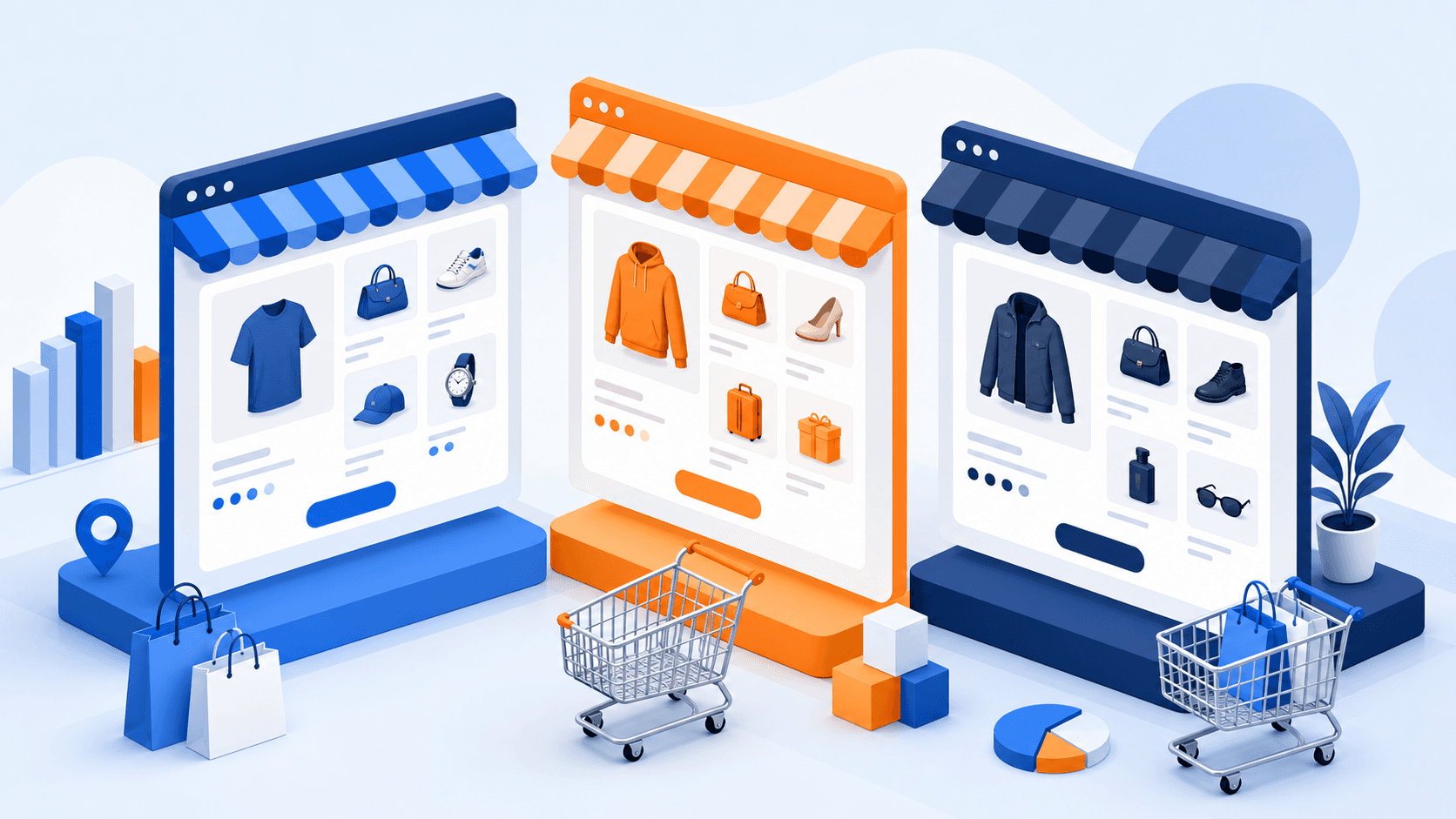

Online Store Websites: Shopify vs WooCommerce vs Custom?
Choosing the right platform toko online can feel overwhelming, especially when every option promises growth, convenience, and better sales. The truth is, there is no single “best” platform for every business. The right choice depends on your budget, how fast you want to launch, how much control you need, and how far you plan to scale.
If you are a business owner planning to sell online, the three most common paths today are Shopify, WooCommerce, and a custom-built store. Each comes with different trade-offs. Shopify is fast and all-in-one, but can get expensive. WooCommerce is flexible and familiar for WordPress users, but needs ongoing maintenance. A custom store gives you full ownership and freedom, but requires a bigger upfront investment.
In this article, we will compare all three in a practical way so you can decide which platform toko online fits your business stage and goals.
Why Choosing the Right Online Store Platform Matters
Your online store is not just a website. It is your sales channel, customer experience, and operational system all in one. The platform you choose affects:
- How quickly you can launch
- How easy it is to manage products and orders
- How much you spend every month
- How flexible your promotions and features can be
- How well your store performs as traffic grows
A platform that works for a small catalog and a few weekly orders may become limiting when your business starts scaling. On the other hand, going too advanced too early can waste budget and slow you down.
That is why it is important to compare not only features, but also long-term fit.
Shopify: Fast, All-in-One, and Scalable
Shopify is one of the most popular ecommerce platforms in the world, and for good reason. It is designed specifically for online selling, which means many important features are already built in.
What Makes Shopify Attractive
Shopify is often the easiest way to launch a professional online store without dealing with technical complexity. Hosting, security, updates, and core ecommerce tools are handled by Shopify.
Key advantages include:
- Fast setup and easy onboarding
- Secure hosting included
- Clean admin dashboard
- Built-in inventory, product, and order management
- Large app ecosystem
- Good scalability for growing brands
- Reliable performance during high traffic periods
For business owners who want to focus on selling rather than managing the technical side, Shopify is a strong option.
The Main Trade-Offs
The convenience of Shopify comes at a cost. Monthly subscription fees, paid apps, premium themes, and transaction fees can add up over time. You also work within Shopify’s ecosystem, so customization is possible, but not as open as fully self-hosted or custom solutions.
Shopify is a great platform toko online if you value speed, simplicity, and stability. But if your business needs unusual workflows or highly specific features, you may feel limited later.
Best Fit for Shopify
Shopify is ideal for:
- New businesses that want to launch quickly
- Growing brands with budget for convenience
- Teams without in-house technical support
- Businesses expecting scale and wanting a proven system
WooCommerce: Flexible and Familiar, but Needs Maintenance
WooCommerce is a WordPress plugin that turns a website into an online store. It is extremely popular because WordPress itself is widely used, and WooCommerce gives businesses a flexible way to sell online.
Why Many Businesses Choose WooCommerce
The biggest strength of WooCommerce is flexibility. Since it runs on WordPress, you have more control over design, content, SEO structure, and plugin choices. It is especially attractive if your business website already uses WordPress.
Benefits of WooCommerce include:
- Lower starting cost compared to custom development
- Strong flexibility for design and content
- Large plugin ecosystem
- Good SEO control through WordPress
- Full ownership of your website and hosting environment
- Easy to combine ecommerce with blogs, landing pages, and content marketing
For content-driven businesses, WooCommerce can be a very practical platform toko online.
The Challenges of WooCommerce
WooCommerce is not as plug-and-play as Shopify. You need to manage hosting, plugin updates, security, backups, and performance optimization. As your store grows, maintenance becomes more important.
Common challenges include:
- Plugin conflicts
- Slower performance if not optimized properly
- Security risks if updates are neglected
- More technical setup compared to Shopify
- Scalability depends on hosting quality and development support
WooCommerce gives you freedom, but that freedom comes with responsibility.
Best Fit for WooCommerce
WooCommerce works well for:
- Businesses already using WordPress
- Owners who want flexibility without going fully custom
- Brands that rely on SEO and content marketing
- Teams with access to web support for maintenance
Custom Store: Full Ownership and Maximum Flexibility
A custom ecommerce website is built specifically for your business, often using modern frameworks like Next.js and integrated directly with payment gateways, shipping systems, CRMs, or internal tools.
This approach is very different from using Shopify or WooCommerce. Instead of adapting your business to a platform, the platform is built around your business.
Why Businesses Go Custom
The biggest advantage of custom development is control. You can create exactly the shopping experience, backend logic, and integrations your business needs.
A custom online store can offer:
- Unique UI and user experience
- Tailored checkout flows
- Direct payment gateway integration
- Better integration with ERP, CRM, or inventory systems
- High performance optimization
- Full ownership of code and infrastructure
- No dependency on platform limitations
If your business model is unique, or if ecommerce is central to your operations, a custom platform toko online can be a smart long-term asset.
The Main Trade-Offs
Custom development requires a larger upfront investment. It also needs the right planning, design process, and technical team. Unlike Shopify, there is no instant setup. Unlike WooCommerce, there is no ready-made plugin ecosystem to rely on for everything.
You should also plan for:
- Development timeline
- Ongoing maintenance and improvements
- Hosting and infrastructure decisions
- Technical support after launch
In short, custom is more expensive at the beginning, but it gives you the most ownership and strategic flexibility.
Best Fit for Custom Development
Custom stores are best for:
- Established businesses with proven online sales
- Brands with complex workflows or integrations
- Companies that want to fully own their ecommerce system
- Businesses planning long-term scale and differentiation
Shopify vs WooCommerce vs Custom: Side-by-Side Comparison
Here is a practical comparison to help you evaluate each platform toko online option.
| Factor | Shopify | WooCommerce | Custom |
|---|---|---|---|
| Initial Cost | Low to medium | Low to medium | High |
| Ongoing Cost | Medium to high | Medium | Medium to high |
| Ease of Use | Very easy | Moderate | Depends on build |
| Setup Speed | Fast | Moderate | Slowest |
| Flexibility | Moderate | High | Very high |
| Features | Strong built-in + apps | Strong via plugins | Fully tailored |
| Maintenance | Minimal | Requires regular maintenance | Requires technical support |
| Scalability | Very good | Good with proper setup | Excellent |
| Ownership | Limited by platform ecosystem | Full website ownership | Full code and system ownership |
| Best For | Fast launch and growth | Flexible WordPress-based stores | Complex and scalable business needs |
This table shows a simple truth: each solution solves a different problem.
- Shopify solves speed and convenience.
- WooCommerce solves flexibility at a manageable cost.
- Custom solves ownership and advanced business needs.
Which Platform Toko Online Is Right for Your Business Stage?
Instead of asking which platform is best in general, it is more useful to ask which one is best for your business right now.
If You Are Just Starting Out
If you want to validate your products, launch quickly, and avoid technical headaches, Shopify is usually the safest choice. You can go live fast and focus on sales, marketing, and customer feedback.
WooCommerce can also work at this stage if you already have a WordPress site and some technical support.
If You Are Growing and Need More Flexibility
If your store is getting more traffic, your catalog is expanding, and content marketing matters, WooCommerce can be a strong middle-ground option. It gives you more control than Shopify without the full cost of custom development.
This is often the right stage to invest in better hosting, UX improvements, and conversion optimization.
If Your Operations Are Becoming More Complex
Once your business needs custom pricing logic, multi-location inventory, special checkout flows, or integration with internal systems, platform limitations start to matter more.
At this point, a custom solution becomes worth considering. While the initial cost is higher, it can save you from workarounds, plugin overload, and long-term inefficiency.
If You Want to Build a Long-Term Digital Asset
A custom ecommerce website is not only about features. It is also about ownership. You own the code, the experience, and the roadmap. For businesses that see ecommerce as a core part of their growth strategy, that level of control can be a major advantage.
Final Thoughts
There is no universal winner between Shopify, WooCommerce, and custom development. The best platform toko online depends on your current business stage, internal resources, and long-term goals.
- Choose Shopify if you want an all-in-one solution that is easy to launch and scale, even if it costs more over time.
- Choose WooCommerce if you want flexibility, WordPress compatibility, and stronger control, as long as you are ready for maintenance.
- Choose Custom if you want to own everything, build around your business needs, and invest in a scalable long-term system.
If you are still unsure which direction makes the most sense, that is completely normal. The right decision often becomes clearer after reviewing your business model, operational needs, and growth plan.
At kreasikita.co, we help businesses build ecommerce websites that are not just visually strong, but also practical for growth. Whether you need a Shopify store, a WooCommerce setup, or a custom-built ecommerce platform, our team can help you choose and build the right solution.
Want to discuss your online store plan? Visit kreasikita.co and let’s explore the best path for your business.