

Why Headless CMS Will Be the Choice for Modern Businesses in 2026
If your website is still built the old way, there is a good chance it is working harder than it needs to. Modern businesses are no longer publishing content to just one website. They are managing content for landing pages, mobile apps, e-commerce stores, digital screens, customer portals, and even AI-powered experiences.
That is exactly why headless CMS is becoming a serious choice for businesses heading into 2026.
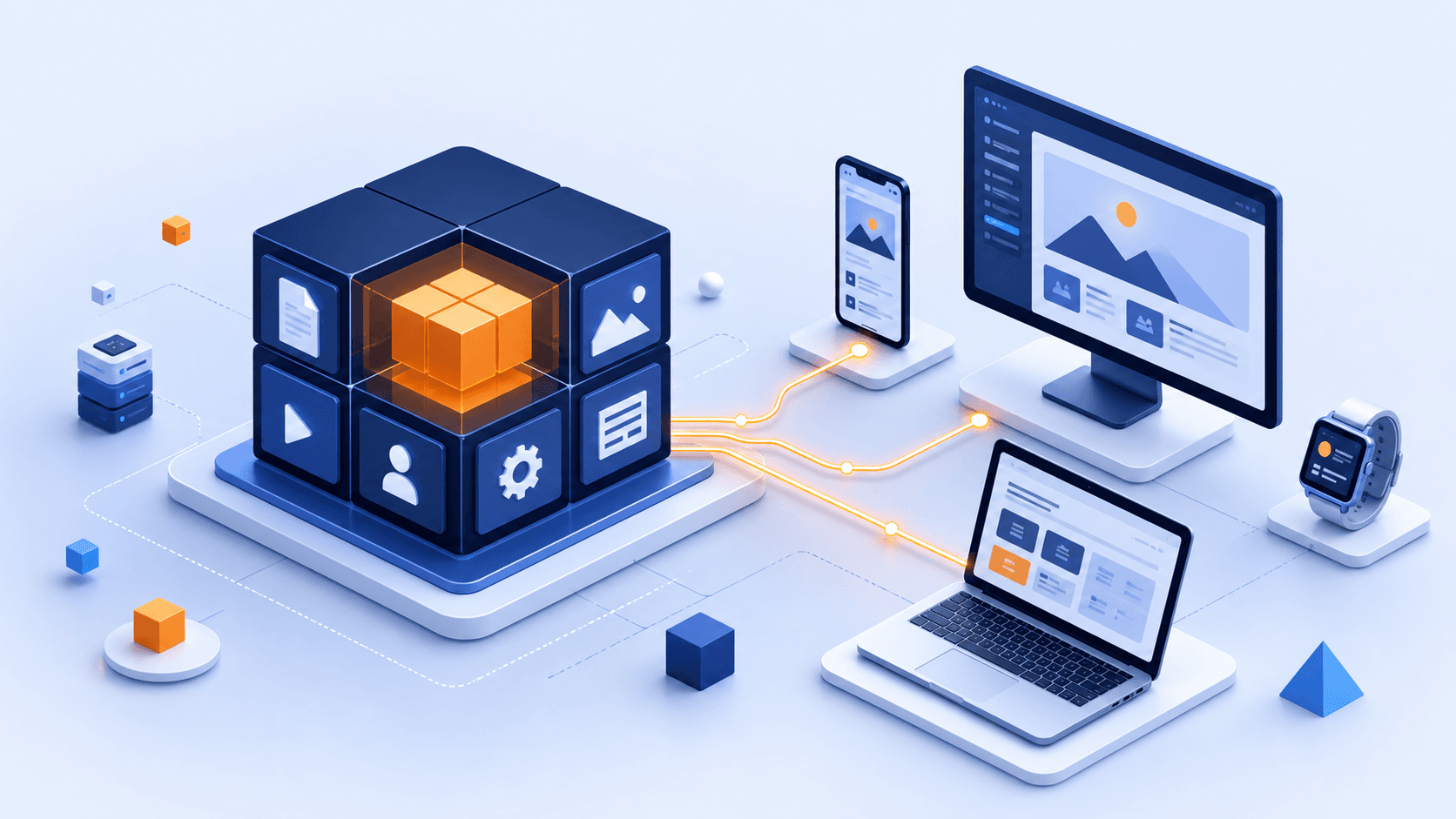
Instead of tying content and design together in one rigid system, a headless CMS separates the content layer from the presentation layer. Think of it like a professional kitchen and a dining room. The kitchen prepares the food, while the dining room decides how it is served. They work together, but they do not need to be physically locked into one setup.
For modern brands that care about speed, flexibility, and digital growth, this architecture makes a lot of sense.
What Is a Headless CMS?
A headless CMS is a content management system where the backend and frontend are separated.
- The backend is where your team creates, edits, and organizes content.
- The frontend is where that content gets displayed, whether on a website, app, kiosk, or another digital channel.
In a traditional CMS like WordPress in its monolithic form, both parts are tightly connected. The content lives in the same system that also controls themes, templates, and page rendering.
With a headless CMS, the CMS only focuses on managing content. That content is then delivered through APIs to any frontend you want.
A Simple Analogy
Imagine a clothing brand.
In a traditional setup, the warehouse, storefront, cashier, and window display are all in one building and controlled by one system. It works, but changing one part often affects everything else.
In a headless CMS setup, the warehouse is separate from the storefront. The warehouse stores and organizes products efficiently, while different storefronts can present those products in different ways. One store might be a website, another a mobile app, and another a smart display in a retail shop.
That separation gives businesses much more freedom.
Headless CMS vs Traditional CMS
Traditional CMS platforms like WordPress are still useful, especially for simple websites and content-driven projects. They are familiar, quick to launch, and supported by a huge ecosystem.
But as digital needs become more complex, monolithic systems can start to feel limiting.
Traditional CMS Strengths
- Easy for basic website management
- Large plugin ecosystem
- Faster setup for smaller projects
- Suitable for blogs or company profile websites
Traditional CMS Limitations
- Frontend and backend are tightly coupled
- Performance can suffer when too many plugins are added
- Security risks increase with plugin dependencies
- Harder to scale across multiple digital channels
- Custom frontend experiences can become expensive and messy
Why Headless CMS Feels More Future-Ready
A headless CMS allows developers to build the frontend using modern frameworks like Next.js, Nuxt, Astro, or React, while content teams still manage everything in a clean backend interface.
This means businesses are not forced to use one system for everything. They can choose the best tools for content, design, and performance.
That flexibility is one of the biggest reasons headless CMS keeps gaining momentum in modern web architecture.
Why Modern Businesses Are Choosing Headless CMS in 2026
By 2026, digital expectations will be even higher than they are today. Users expect fast websites, seamless mobile experiences, and consistent branding across every touchpoint.
A headless approach helps businesses meet those expectations more effectively.
1. Better Performance
Performance is no longer just a technical metric. It directly affects user experience, SEO, and conversions.
Because headless websites are often paired with JAMstack or modern frontend frameworks, they can load much faster than traditional dynamic websites. Pages can be pre-rendered, cached globally, and optimized more efficiently.
For businesses, this means:
- Faster page load times
- Better Core Web Vitals
- Improved SEO potential
- Higher conversion rates
- Better experience on mobile devices
In competitive markets, speed is a real business advantage.
2. Stronger Security
A traditional CMS often exposes more attack surfaces because the frontend, admin panel, database, and plugins are closely connected.
With a headless CMS, the public-facing frontend is separated from the content backend. This reduces direct exposure and can lower common security risks.
That does not make headless automatically invincible, but it does create a cleaner and often safer architecture when implemented properly.
This is especially valuable for premium brands, enterprise platforms, and businesses handling sensitive customer interactions.
3. Omnichannel Content Delivery
One of the biggest advantages of a headless CMS is that content can be published once and delivered anywhere.
That includes:
- Websites
- Mobile apps
- E-commerce platforms
- Internal dashboards
- Digital signage
- Smart devices
- Future AI interfaces
Instead of rewriting the same content for different platforms, teams can manage it centrally and distribute it through APIs.
For growing businesses, this saves time and keeps the brand more consistent.
4. Easier Scalability
As businesses grow, their digital ecosystem usually becomes more complex. New landing pages, regions, microsites, apps, and customer experiences often need to be launched quickly.
A monolithic CMS can become difficult to maintain at that point.
A headless CMS offers better scalability because each layer can evolve independently. Developers can improve the frontend without disrupting content operations. Content teams can publish updates without waiting for full system changes.
This modular approach is ideal for businesses planning long-term digital expansion.
Popular Headless CMS Tools to Know
There is no single best platform for every business. The right choice depends on your team, budget, technical needs, and growth plan. Still, several tools stand out in the headless ecosystem.
Strapi
Strapi is a popular open-source headless CMS that gives teams strong flexibility and control. It is a good option for businesses that want customizable content structures and self-hosted deployment.
Sanity
Sanity is known for its real-time collaboration features and highly structured content modeling. It works well for teams that care about editorial workflow and flexible content reuse.
Contentful
Contentful is one of the most established enterprise-focused headless platforms. It is often chosen by larger organizations that need reliability, governance, and scalable content operations.
Supabase
Strictly speaking, Supabase is not a traditional CMS. It is more of a backend platform with database, auth, and API capabilities. But many modern teams use Supabase as part of a headless architecture, especially when building custom content-driven applications.
For some projects, combining Supabase with a custom admin panel can create a very powerful modern setup.
When Does Headless CMS Make the Most Sense?
Not every website needs a headless architecture. If you only need a simple company profile or a standard blog, a traditional CMS may still be the most practical choice.
But there are clear situations where headless CMS becomes the smarter investment.
Premium Brands That Need Custom Experiences
Premium brands usually care deeply about visual identity, storytelling, and performance. They do not want to be limited by generic templates or plugin-heavy systems.
A headless setup allows for a fully custom frontend experience while keeping content management efficient behind the scenes.
Businesses Operating at Large Scale
If your company manages many pages, teams, markets, or product lines, scalability matters. Headless architecture helps support large content operations without turning the website into a maintenance burden.
Multi-Channel Businesses
If your content needs to appear across web, mobile, internal tools, and other platforms, headless is often the better foundation. It keeps content centralized while allowing each channel to have its own optimized frontend.
Teams Building with Modern Web Stack
If your developers already work with JAMstack, Next.js, React, Vue, or API-first systems, adopting a headless CMS usually feels natural. It fits how modern digital products are built today.
Is Headless CMS the Right Move for 2026?
For many modern businesses, yes.
The shift toward faster websites, stronger security, better scalability, and omnichannel content delivery is not slowing down. If anything, those demands will only increase in 2026.
A headless CMS is not just a technical trend. It is a practical response to how digital experiences are evolving. By separating content from presentation, businesses gain more freedom to create, adapt, and scale without being trapped by outdated architecture.
That said, choosing headless should always be based on business goals, not hype. The best setup is the one that supports your brand, your team, and your growth strategy.
Final Thoughts
If your business is aiming for premium digital experiences, larger-scale growth, or multi-channel content delivery, headless CMS is absolutely worth considering for 2026.
It gives you the flexibility of modern architecture, the speed users expect, and the foundation needed for future-ready digital products.
If you are exploring whether a headless website, JAMstack build, or modern web architecture is the right fit for your business, kreasikita.co can help you plan and build it properly. Sometimes the biggest upgrade is not just a redesign, but rethinking the system behind it.