
Behind the Scenes: Our Website Design Process from Brief to Launch
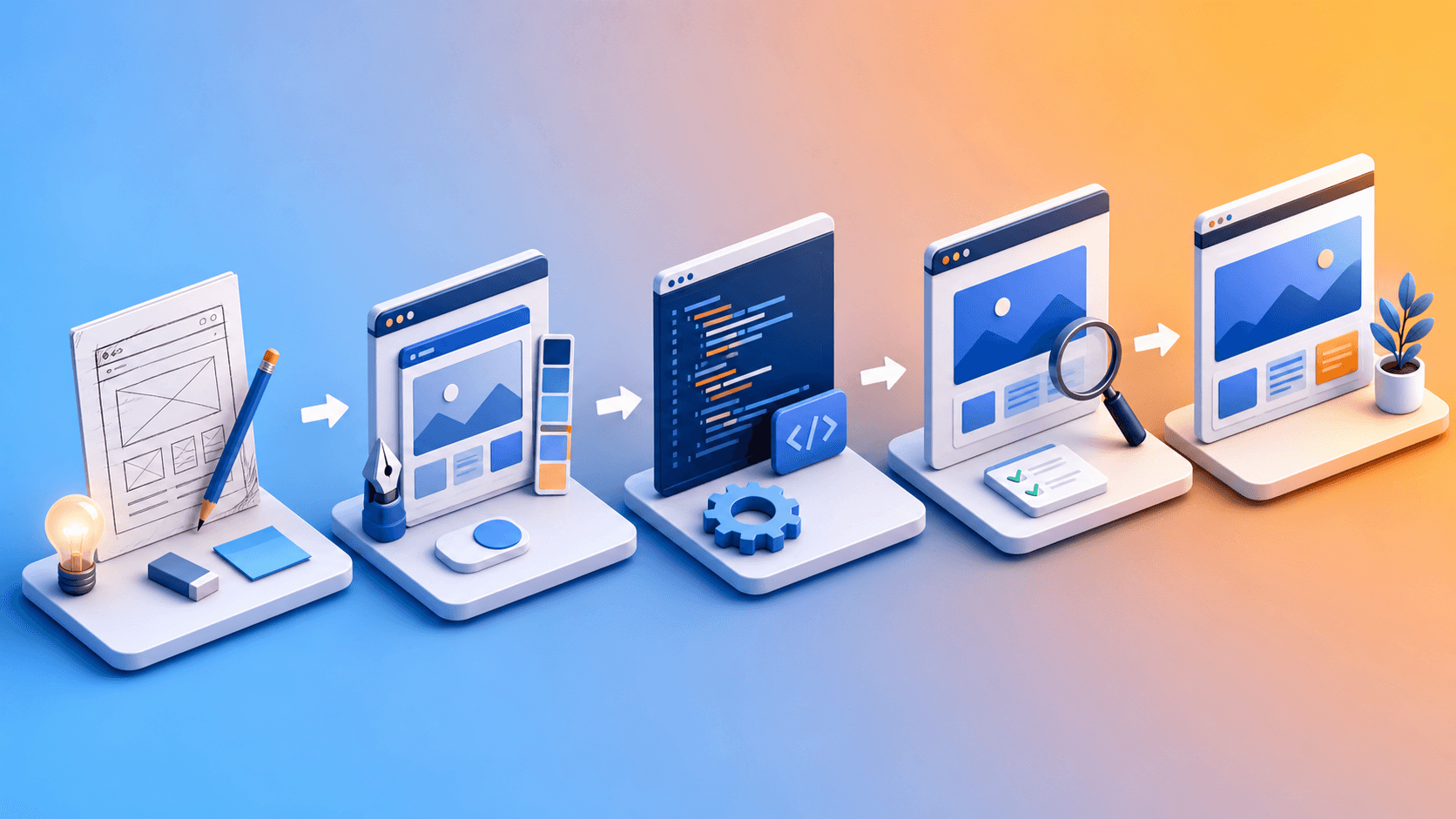
A polished website can look effortless when it goes live. Smooth animations, clear messaging, fast loading pages, and a design that feels just right often make people think the process was simple. In reality, every successful website is the result of a structured, collaborative, and carefully managed journey.
At kreasikita.co, we believe great results come from a clear develop web workflow that keeps strategy, creativity, and execution aligned from day one. For many prospects, one of the biggest questions is not just what we can build, but how we work behind the scenes.
So in this article, we are opening the curtain. Here is a walkthrough of our website design process, from the first discovery call to post-launch monitoring, including what happens at each stage, how long it usually takes, what deliverables you can expect, and what role the client plays along the way.
Why Process Matters More Than Most People Think
Before we get into the steps, it helps to understand why process matters so much.
A website is not just a visual project. It is a business tool. It needs to communicate your brand, guide users, support marketing goals, and work reliably across devices. Without a clear workflow, projects can easily drift into endless revisions, unclear expectations, or a final result that looks nice but does not perform.
That is why our internal process is designed to answer three key questions at every stage:
- What problem are we solving?
- What should be delivered next?
- Who needs to review or approve it?
This structure helps us move efficiently while still leaving room for creativity. It also gives clients visibility, so you always know where the project stands.
Phase 1: Setting the Foundation
The first part of our process is all about clarity. Before anyone starts designing or coding, we need to understand the business, the audience, and the goals.
1. Discovery Call and Project Brief
Every project starts with a conversation.
In the discovery call, we learn about your business, your current website situation, your goals, your audience, and any challenges you are facing. Some clients come to us with a very clear vision. Others know they need a better website but are not yet sure what that should look like. Both are completely normal.
Typical duration: 2-5 days
Deliverables: discovery notes, project brief, scope summary, initial timeline
Client role: share business goals, target audience, references, must-have features, and internal constraints
This step is more important than it may seem. A strong brief helps us avoid assumptions later. It gives the entire team a shared starting point and makes sure the website is built around real objectives, not guesswork.
We usually ask questions like:
- What should the website help your business achieve?
- Who are the primary users?
- What pages or features are essential?
- Are there any websites you admire or want to avoid copying?
- What internal approval process should we expect?
By the end of this stage, we turn the conversation into a practical roadmap.
2. Research and Competitor Analysis
Once the brief is clear, we move into research.
This is where strategy starts taking shape. We look at your industry, competitors, user expectations, and content opportunities. We study how similar brands position themselves, what design patterns are common in your market, and where your website can stand out.
Typical duration: 3-7 days
Deliverables: research summary, competitor review, inspiration references, strategic recommendations
Client role: validate market context, share competitor list, provide access to existing analytics or brand materials if available
This stage often reveals useful insights. Sometimes a competitor has strong visual branding but weak navigation. Sometimes the market is crowded with similar-looking websites, creating an opportunity for a more distinctive visual direction. Sometimes user needs are simpler than expected, which helps us reduce unnecessary complexity.
Research gives meaning to design decisions. Instead of saying, “This layout looks good,” we can say, “This layout supports how your audience actually browses and compares services.”
Phase 2: Turning Ideas Into Structure and Style
Once the strategic foundation is ready, we begin shaping the user experience and visual direction.
3. Wireframing
Wireframes are the blueprint of the website.
At this stage, we focus on structure before aesthetics. We map out page layouts, content hierarchy, user flow, and the placement of key elements like headlines, calls to action, forms, and navigation.
Typical duration: 4-8 days
Deliverables: low-fidelity wireframes for key pages, user flow overview, layout recommendations
Client role: review structure, confirm content priorities, give feedback on usability and business alignment
Wireframing is where many important discussions happen early, when changes are still fast and efficient. It is much easier to adjust content flow in grayscale layouts than after high-fidelity designs are complete.
For example, a client may realize:
- the homepage needs a stronger service overview,
- the contact form should be shorter,
- the case studies deserve more emphasis,
- or the mobile experience needs a simpler navigation approach.
This step keeps the project practical. It ensures that the website is not just attractive, but also intuitive.
4. Visual Design: Mood Board and Mockup
Now the project starts to feel real.
After the wireframes are approved, we move into visual design. We usually begin with a mood board to establish the creative direction. This can include colors, typography, image style, UI references, and overall brand mood.
Once the direction is aligned, we create high-fidelity mockups for the main pages.
Typical duration: 7-14 days
Deliverables: mood board, design system direction, high-fidelity mockups, revision rounds
Client role: approve visual direction, provide brand assets, give consolidated feedback, align internal stakeholders
This is where storytelling becomes visual. We translate your brand personality into layout rhythm, spacing, typography choices, and interface details. A professional services website may need a clean and credible tone. A lifestyle brand may need something warmer and more expressive. A tech company may need clarity with a modern edge.
One thing we always emphasize here is feedback quality. The best design feedback is specific and tied to goals. Comments like “Can the CTA be more visible?” or “This section feels too technical for our audience” are much more useful than vague reactions.
By the end of this stage, clients can clearly see how the website will look before development begins.
Phase 3: Building, Testing, and Going Live
With the design approved, we move into production. This is where ideas become a working website.
5. Development
Development is where our develop web workflow becomes highly technical and detail-driven.
Our team turns approved designs into responsive, functional pages. Depending on the project, this may include CMS setup, custom front-end development, animations, forms, integrations, performance optimization, and basic SEO implementation.
Typical duration: 10-20 days
Deliverables: staging website, responsive front-end, CMS or back-end setup, feature implementation
Client role: provide final content, approve functional priorities, test admin flows if relevant, answer clarification questions promptly
This stage works best when content is ready on time. Delays in copy, images, product data, or legal pages can slow down development, even when the design is already approved.
During development, we focus on:
- responsiveness across desktop, tablet, and mobile,
- clean implementation of the approved design,
- page speed and performance basics,
- SEO-friendly structure,
- and a manageable editing experience if a CMS is included.
We usually build on a staging environment so the site can be reviewed safely before launch.
6. QA Testing
Before launch, we test everything carefully.
Quality assurance is where we review the website from both technical and user perspectives. We check layout consistency, broken links, mobile behavior, browser compatibility, forms, loading performance, and content formatting.
Typical duration: 3-6 days
Deliverables: QA checklist, bug fixes, final pre-launch review
Client role: perform user-side review, test key pages and forms, confirm final approval
This stage may not be the most glamorous, but it is one of the most important. A website can look excellent in mockups and still fail in small real-world details if QA is rushed.
We often test questions like:
- Does the contact form send properly?
- Are buttons consistent across pages?
- Does the mobile menu behave as expected?
- Are images optimized and displayed correctly?
- Is the content easy to scan and free from obvious formatting issues?
The goal is simple: launch with confidence, not with crossed fingers.
7. Launch and Post-Launch Monitoring
Launch day is exciting, but it is not the end of the process.
Once the website passes final checks, we deploy it to the live server, configure essential settings, and monitor its early performance. That includes checking uptime, form submissions, analytics setup, and any unexpected issues that only appear in the live environment.
Typical duration: 1-3 days for launch, 1-2 weeks for monitoring
Deliverables: live website, launch checklist completion, monitoring report or support notes
Client role: verify business-critical functions, monitor incoming leads or inquiries, share early user feedback
This final step matters because even a smooth launch can reveal small adjustments that improve the live experience. Sometimes it is a spacing issue on one device. Sometimes it is a content tweak after seeing real user behavior. Sometimes it is a technical refinement based on analytics.
Post-launch support helps make sure the website does not just go live, but starts strong.
What Clients Often Appreciate Most About This Workflow
When prospects ask how working with an agency feels, the real answer is this: a good process reduces stress.
Our workflow is designed to create momentum without losing collaboration. Clients usually appreciate a few things most:
Clear expectations at every stage
You know what is happening, what is being delivered, and what decisions are needed from your side.
Fewer surprises later
By validating structure and design before development, we reduce costly changes at the end.
A balance of guidance and collaboration
We do not expect clients to know every technical detail. Our role is to guide the process while making space for your input where it matters most.
A website built with purpose
Every stage connects back to business goals, user needs, and long-term usability.
In other words, our develop web workflow is not just about getting from point A to point B. It is about making sure the final website is strategic, functional, and worth the investment.
Final Thoughts
A successful website launch is never just one big creative moment. It is the result of many smaller, well-managed steps: discovery, research, wireframing, visual design, development, testing, and post-launch care.
At kreasikita.co, this process is what helps us turn ideas into websites that not only look good, but also work hard for the businesses behind them.
If you have been wondering what it is like to work with a web design agency, we hope this behind-the-scenes walkthrough gives you a clearer picture. And if you are planning a new website or redesign, we would be happy to talk through your goals and show you how our process can support them.
Visit kreasikita.co to start the conversation.